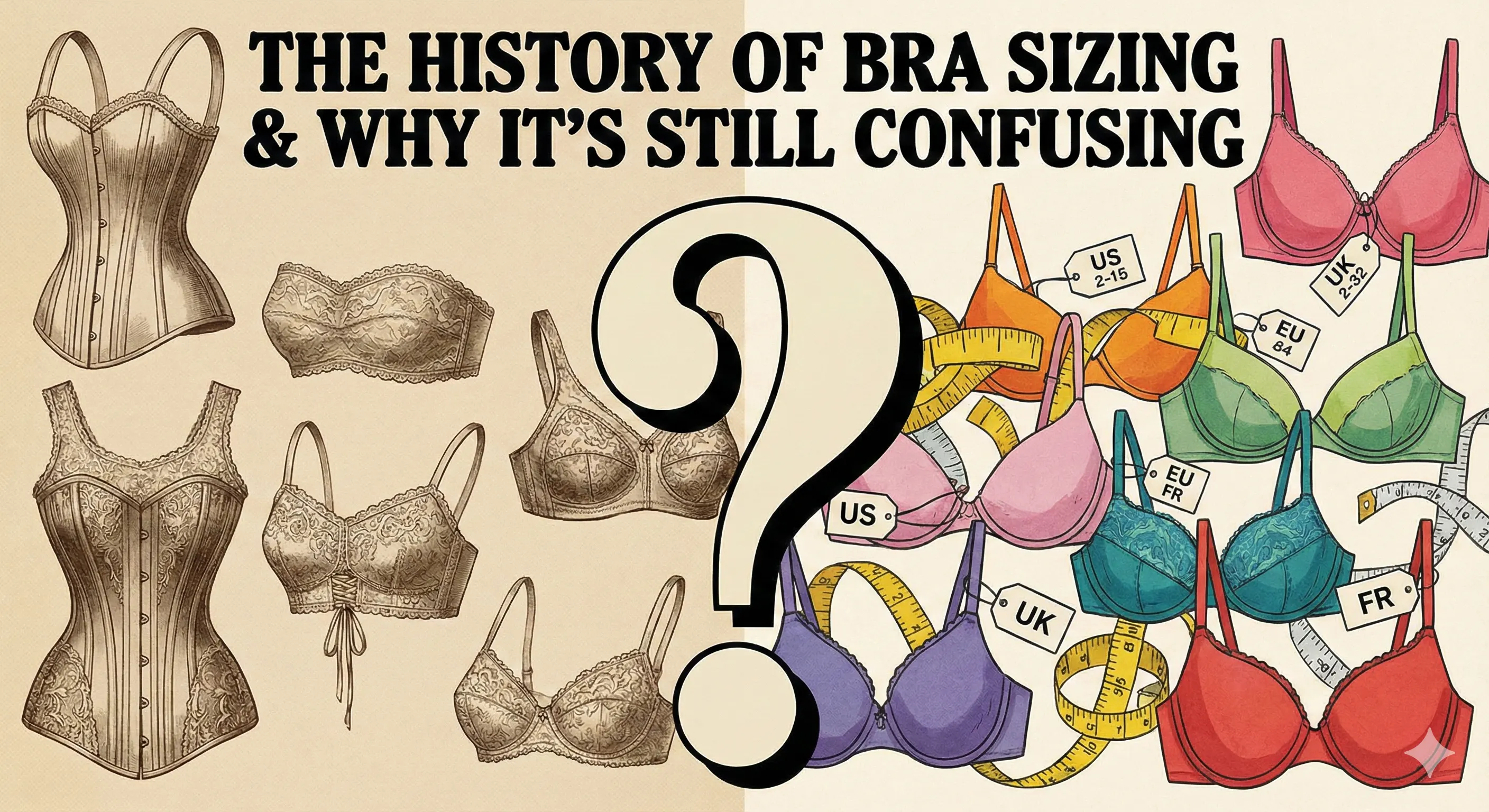
Bra fitting is surrounded by myths and misconceptions that can prevent you from finding your perfect fit. Let's separate fact from fiction with expert knowledge and scientific evidence.
Myth 1: "Add 4-5 Inches to Your Band Measurement"
The Myth: Traditional fitting methods suggest adding 4-5 inches to your underbust measurement.
The Reality: This outdated method was created when bras were made with less stretch. Modern bras are designed to fit your actual underbust measurement.
Expert Insight: "Adding inches creates a loose band that provides inadequate support. The band should fit snugly on your actual ribcage measurement," says Sarah Johnson, certified fitting specialist.
Myth 2: "DD is the Largest Cup Size"
The Myth: Cup sizes stop at DD, and anything larger is "unusual."
The Reality: Cup sizes extend well beyond DD (E, F, G, H, I, J, K, and beyond). Many women who think they're D or DD are actually larger cup sizes.
The Statistics: Studies show that over 80% of women wear the wrong bra size, often with cups that are too small.
Myth 3: "A D Cup is Always the Same Size"
The Myth: All D cups are the same size regardless of band size.
The Reality: Cup size is relative to band size. A 32D is much smaller than a 38D.
Visual Example:
- 32D cup volume = 34C = 36B
- 38D cup volume = 40C = 42B
Myth 4: "Expensive Bras Always Fit Better"
The Myth: Higher price equals better fit.
The Reality: Fit depends on your body shape and the bra's construction, not price. A $20 bra that fits your shape well is better than a $200 bra that doesn't.
What Matters More:
- Understanding your size and shape
- Choosing appropriate styles for your needs
- Quality construction and materials
Myth 5: "Sports Bras Don't Need Proper Sizing"
The Myth: Sports bras are just about compression, so S/M/L sizing is fine.
The Reality: Properly sized sports bras provide better support and comfort. A 34C needs different support than a 34DDD, even in athletic wear.
Performance Impact: Poor sports bra fit can cause:
- Inadequate support during exercise
- Discomfort and chafing
- Long-term breast tissue damage
- Reduced athletic performance
Myth 6: "Bra Size Doesn't Change After Age 25"
The Myth: Once you reach adulthood, your bra size stays constant.
The Reality: Bra size can change due to:
- Weight fluctuations (even 5-10 pounds)
- Hormonal changes (pregnancy, menopause, birth control)
- Aging and gravity effects
- Health conditions and medications
Recommendation: Re-measure annually or when you notice fit issues.
Myth 7: "Underwire Bras Are Always More Supportive"
The Myth: You need underwire for proper support.
The Reality: Support comes primarily from the band (70-80%) and proper cup fit. Well-designed wireless bras can provide excellent support.
When Wireless Works:
- Properly fitted band provides adequate support
- Modern elastic and construction techniques
- Comfort preference over underwire
- Certain activities (sleep, low-impact exercise)
Myth 8: "Sister Sizes Fit Exactly the Same"
The Myth: 34C, 32D, and 36B are interchangeable.
The Reality: While they have the same cup volume, the fit and feel are different due to band size variations.
Fit Differences:
- 32D: Tighter band, more support, higher cup positioning
- 34C: Balanced fit
- 36B: Looser band, lower support, wider cup positioning
Myth 9: "Bras Should Last for Years"
The Myth: A good bra should last 2-3 years with regular wear.
The Reality: Bras lose elasticity and support over time. With regular wear (2-3 times per week), replace bras every 6-12 months.
Signs to Replace:
- Band stretches beyond the first hook
- Straps lose elasticity
- Underwire pokes through fabric
- Cups lose shape or become baggy
- Visible wear and tear
Myth 10: "Measuring at Home is Inaccurate"
The Myth: Only professional fittings provide accurate measurements.
The Reality: With proper technique, home measuring can be very accurate. However, professional fitting adds value through:
Home Measuring Advantages:
- Privacy and comfort
- No pressure to purchase
- Consistent conditions
- Multiple measurement opportunities
Professional Fitting Benefits:
- Expert assessment of shape and fit issues
- Brand knowledge and sizing variations
- Immediate try-on and adjustment
- Style recommendations for your needs
The Science of Proper Fit
What Research Shows:
- Support Distribution: 80% from band, 20% from straps
- Health Impact: Poor fit linked to back pain, poor posture, and breast pain
- Sizing Accuracy: Proper measurement techniques are 85-90% accurate
Body Shape Factors:
Not all bodies fit standard sizing curves. Consider:
- Root width: How wide your breast tissue extends
- Projection: How far your breasts project from your chest
- Shape: Full on top, full on bottom, or even fullness
- Spacing: Close-set or wide-set breasts
Expert Recommendations
For Accurate Self-Measuring:
- Use a soft measuring tape
- Measure against bare skin or thin bra
- Keep tape level and snug, not tight
- Take measurements at the same time of month
- Round to nearest whole number
For Better Fit:
- Start with accurate measurements
- Understand your breast shape
- Try multiple sizes and styles
- Pay attention to comfort and support
- Don't be attached to a size number
Conclusion
Understanding the facts about bra fitting empowers you to make better choices and find more comfortable, supportive bras. Remember:
- Modern sizing methods are more accurate than traditional approaches
- Your size can and will change over time
- Proper fit is about more than just measurements
- Comfort and support should be your primary goals
Don't let myths keep you from finding bras that fit well and make you feel confident. Use accurate information, trust your body's feedback, and don't hesitate to seek professional help when needed.